
Music Transcription: Training Students to Think Like Musical Detectives
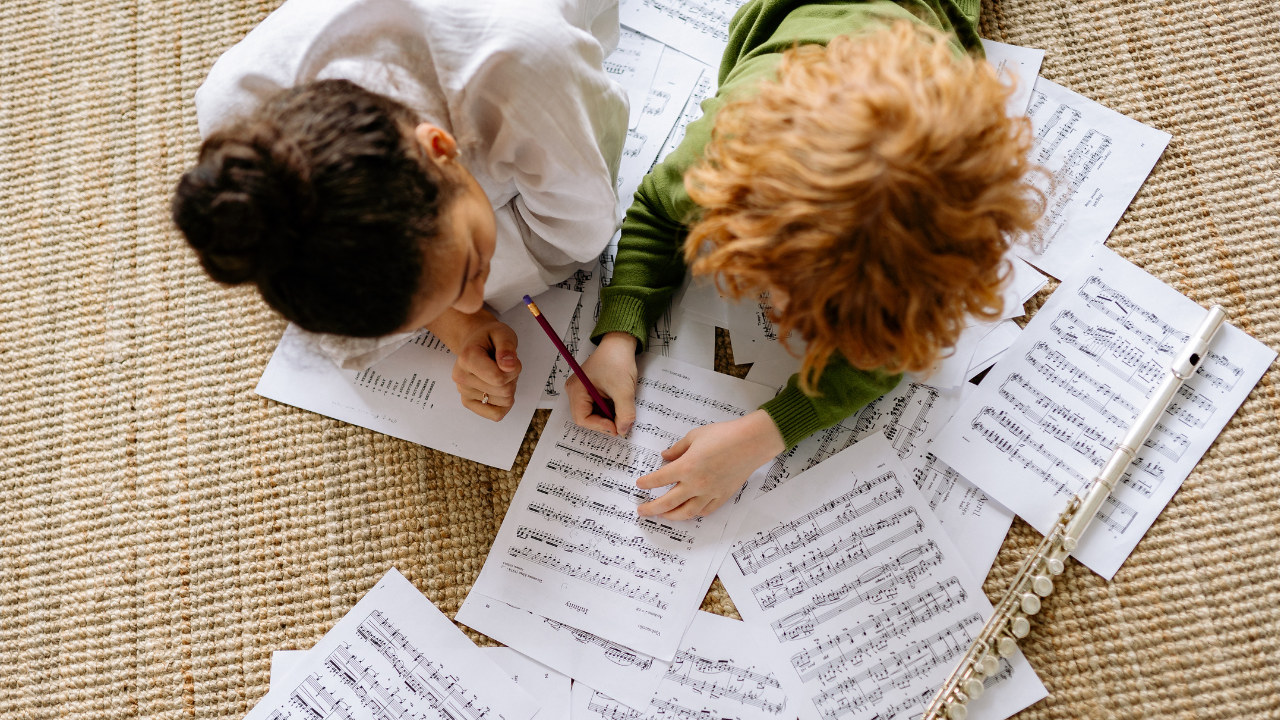
One of the most powerful and often underestimated tools in music education is music transcription. Transcription is the skill of listening to real music and working out exactly what is being played – by ear.
At Ashbea Music we encourage students of all ages to practise transcription because it brings together three essential elements of musicianship:
careful, focused listening
solid music theory
detailed musical analysis
When children learn to transcribe, they stop being passive readers of notes and start becoming active, independent musicians.
What Exactly Is Music Transcription?
In simple terms, transcription means turning sound into notation.
It might involve:
writing down a melody you hear
figuring out a rhythm pattern
working out chords from a song
notating something you’ve improvised yourself
It doesn’t have to be complicated or advanced – even clapping back a rhythm and writing it down is a form of transcription.
The key idea is this: Listen → Understand → Write
Why Transcription Matters – Right Up to GCSE and A-Level
Many parents are surprised to learn that transcription is not just a “nice extra” – it’s a core skill in formal music education.
At both GCSE and A-Level Music, students are required to complete:
melodic dictation questions
rhythmic dictation exercises
aural analysis tasks
In fact, many school music lessons at this level regularly begin with short dictation practice to sharpen students’ ears.
The better a student is at transcription, the more confident they feel in these exams and classroom activities.
So practising transcription from an early age is one of the best long-term investments a young musician can make.
Essential for Jazz and Pop Musicians
Transcription isn’t only for classical musicians.
In the world of jazz and pop, transcription is one of the main ways musicians improve.
Jazz players in particular spend hours:
listening to solos
copying riffs and licks
working out chord progressions
learning grooves and bass lines by ear
They know that to sound like great musicians, they first need to listen like great musicians.
Whether they write it down or simply learn it by ear, this process of listening and copying is transcription in action.
A Skill Rooted Deep in Musical History
Long before music was ever written on paper, transcription happened naturally.
Folk songs, traditional melodies and cultural music were passed down from generation to generation purely by:
listening
copying
remembering
repeating
This aural tradition is the historical foundation of transcription.
Even today, many musicians learn new pieces in exactly the same way – by ear first, notation second.
Transcription in Real-Life Situations
Transcription isn’t just an academic exercise – it has very practical uses:
If you record an original composition and later want to write it down, you’ll need to transcribe it.
If your child improvises something they love, transcription helps preserve it on paper.
If a student hears something “cool” another musician has played, the only way to learn it is to listen carefully and copy it – in other words, to transcribe it.
Being able to capture music from sound is an incredibly valuable life-long skill.
Where the Magic Happens: Three Skills in One
Transcription is so powerful because it merges three essential areas of musicianship.
🎧 1. Listening Skills
Everything starts with the ears.
To transcribe, students must learn to:
focus deeply on sound
tell the difference between high and low notes
recognise steps and leaps
notice rhythmic patterns
hear details like articulation and phrasing
This kind of active listening is very different from just hearing music in the background.
Over time, children begin to listen more carefully in lessons, in ensembles and even in their own practice.
📘 2. Theory Skills
Theory suddenly becomes useful rather than abstract.
Students apply real knowledge of:
scales and keys
intervals
time signatures
note values
chords and harmony
Transcription gives theory a practical purpose.
🔍 3. Analytical Thinking
Transcribing music turns children into problem-solvers.
They learn to:
break music into small sections
test ideas
compare patterns
correct mistakes
think logically and methodically
These are brilliant transferable skills far beyond music.
Creating Musical Detectives
When a child transcribes, they are solving a mystery.
They:
replay tiny sections
hum or sing fragments
tap rhythms on the table
test ideas on the piano or their instrument
make guesses – and correct them
And yes, they sometimes get things wrong.
But that’s the BEST part.
Because every mistake helps them refine their listening and thinking.
Life Skills in Disguise
Regular transcription develops:
perseverance
concentration
pattern recognition
logical thinking
patience
resilience
All through the simple act of listening carefully and figuring things out!
Practical Transcription Exercises
Here are some easy, progressive ways to introduce transcription at home or in lessons.
🎯 Exercise 1: Echo and Find
Goal: Pitch recognition
Play or sing a very short 3–4 note pattern.
Ask the child to sing it back.
Then find those notes on the piano.
Finally, write them down.
Start with simple stepwise patterns like:
C–D–E or G–F–E.
🎯 Exercise 2: Rhythm Detective
Goal: Isolate rhythm from pitch
Clap a short rhythm.
Child claps it back.
Ask them to write it using stick notation.
Check together.
Use rhythms such as:
ta ta ti-ti ta
ti-ti ta ta
ta rest ta
This builds confidence without worrying about pitch at first.
🎯 Exercise 3: Mystery Tune
Goal: Transcribe a simple melody
Choose a very familiar tune:
Happy Birthday
Twinkle Twinkle
Mary Had a Little Lamb
Steps:
Sing the first phrase together.
Child works out the starting note.
Find the rest by ear on the instrument.
Write it down phrase by phrase.
Familiar music makes this far less scary!
🎯 Exercise 4: Fill in the Gaps
Goal: Guided transcription
Give the student a partly completed melody with a few missing notes or rhythms.
They listen and “fill in the blanks”.
This is a brilliant stepping stone toward full transcription.
🎯 Exercise 5: Chord Spotter (for older students)
Goal: Harmony skills
Play a simple chord progression:
C – G – Am – F
Ask the student to:
identify whether chords are major or minor
work out the root notes
notate the progression
Perfect for GCSE-level ears and beyond.
Top Tips for Success
Keep excerpts short – 5–10 seconds is plenty
Repeat many times
Work in tiny steps
Sing first, write later
Celebrate effort more than perfection
Transcription is a skill that grows slowly – but the results are amazing.
Final Thoughts
Music is, first and foremost, something we hear.
Transcription brings students back to that essential truth.
Whether a child is preparing for GCSE dictation, learning a favourite pop song, or writing down their own compositions, transcription helps them become deeper, more independent musicians.
And that is a skill they will carry for life.
Happy practising!
Ashley Kampta

Click image to see how the App works!
Want to Help Your Child Prepare?
Our Music Aptitude Maestros App, is a perfect companion for independent practice!

♫ Join our 8-Module Digital Course
If you’d like to book our Music Aptitude Mastery Course, which gives your child expert support and structured preparation, click below to learn more!